Are you standing in front of the coffee shop shelf or browsing the web and wondering: Arabica or Robusta? Why is one more expensive? Which has more caffeine? And which will smell better in your morning ritual? The answers aren't just a matter of taste — they involve chemistry, agronomy, and the global commodity market. This guide explains everything you need to know before you pick up your next bag of coffee.
What are arabica and robusta?
The coffee we pour into our cups every day comes from two botanical species: Coffea arabica (Arabic) and Coffea canephora (robusta). Although both species are from the same plant family, they differ in almost everything — from the altitude at which they grow to the chemical composition of the grain and the taste in the cup.
- Arabica covers approximately 70 % of world coffee production. It grows at higher altitudes (900–2,000 m), is more sensitive to climate change and disease, but rewards with a complex flavor.
- Robusta accounts for the remaining ~30% of global production. It thrives in lower, warmer climates, is more resilient, and yields higher yields — but at the expense of sensory complexity.
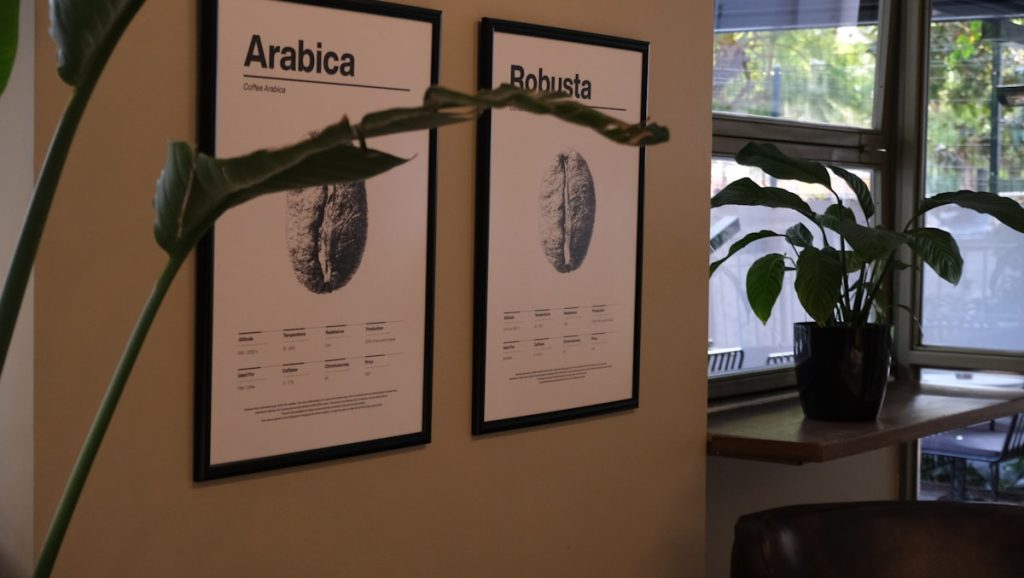
It is this agronomic difference, the complexity of growing Arabica versus the robustness of Robusta, that is one of the fundamental reasons for the differences in price, quality, and taste that you perceive in your cup.
Arabica vs robusta: main differences in taste
The taste of coffee is a chemical story. Before we delve into the molecules, let's take a look at what you'll actually detect in a cup.
Acidity, sweetness and aroma of Arabica
Arabica is the bean that puts the specialty coffee world at the forefront. Its sensory profile is characterized by:
- Sweetness — natural sugars provide a pleasant base without added sugar.
- Higher acidity — not an unpleasant sourness, but a lively, fresh note that is compared to berries, apples, or citrus.
- Complex aroma — notes of chocolate, flowers, tropical fruits, berries or nuts, depending on the origin and processing method.
- A softer body — silkier texture compared to robust.
A quality Arabica from Ethiopia will have floral and fruity-berry notes; an Arabica from Colombia will be more chocolaty with a slight caramel sweetness. This is the world that specialty roasters like Ørin highlight: each origin tells its own story.
Bitterness, earthiness and the “power” of robusta
Robusta is a bean that doesn't hide its strengths. Its sensory profile includes:
- Pronounced bitterness — intense, “heavy,” which stays in the sky.
- Earthy, woody notes — descriptions range from wet earth to wood and rubber.
- Lower acidity — less acidity, but often a more one-dimensional taste.
- Dense, full body — in espresso it contributes to crema and “powerfulness”.
This isn't necessarily a bad thing. In the right context, such as in a well-crafted espresso blend or Turkish coffee, robusta adds that "punchy" power that some drinkers are looking for.
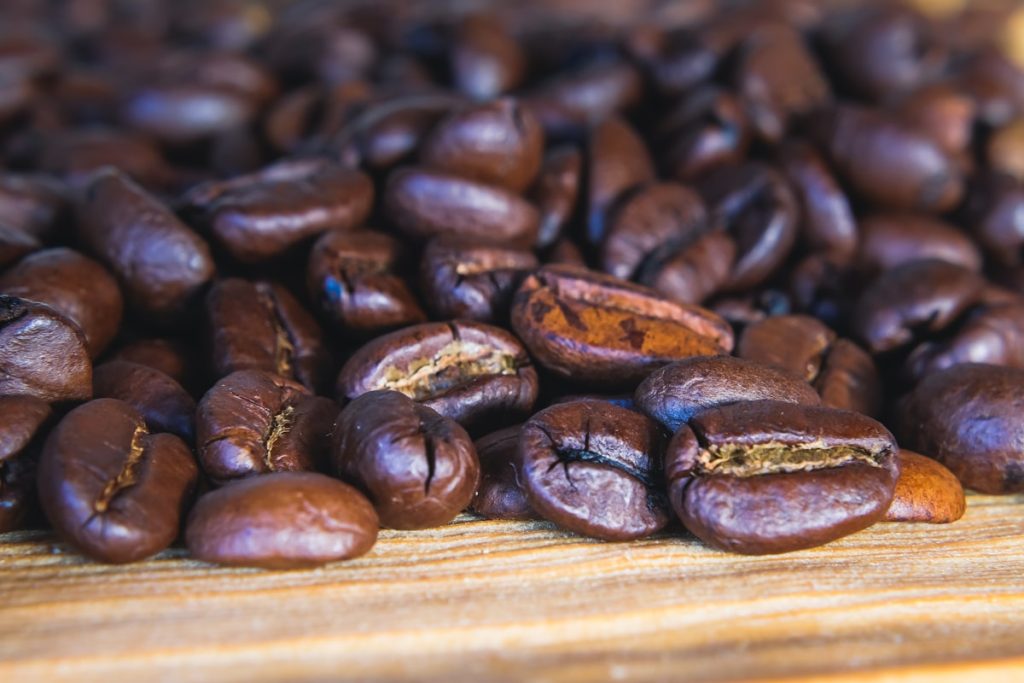
Caffeine, sugars, fats — the scientific explanation of flavors
Why is Arabica so much more complex and flavorful? And why is Robusta so “strong”? The answer lies in the chemical composition of the bean.
Caffeine content
This is one of the most frequently searched information — and the difference is significant:
- Arabica: ~1.0–1.5 % caffeine (dry bean weight)
- Robusta: ~2.0–2.7 % caffeine — in some varieties even up to 4.5 %
Robusta therefore contains approximately twice as much caffeine as Arabica. Caffeine itself contributes to the bitter taste — the higher content in robusta is one reason for its pronounced bitterness.
Sugars and fats: why arabica is more complex
Compared to robusta, Arabica has:
- Almost twice as much natural sugars — these caramelize during roasting, creating complex sweet notes and aroma.
- Approximately 60 % more fats (lipids) — fats carry aromas and contribute to a silky mouthfeel and a longer-lasting aromatic experience.
It is this combination of higher sugars and fats that explains why Arabica is more flavorful and why specialty roasters like ours achieve complex sensory profiles with Arabica that simply cannot be replicated with Robusta.
Chlorogenic Acids: Why Robusta Is Bitter and Why It's (Maybe) Good for You
Robusta contains significantly more chlorogenic acids — these are polyphenols with antioxidant properties that have been the subject of numerous health studies (link to blood sugar regulation, antioxidant activity). Chlorogenic acids break down during roasting, creating bitter compounds — which explains the intense bitterness of robusta. So when you drink robusta, you are drinking a bean with a different antioxidant profile.
Price, commodity market and why 100 % arabica is more expensive
The “100 % arabica” label on the package is not just a marketing ploy — it is the structural economic reality of the global coffee market.
On the commodity exchange (ICE Futures):
- Robusta: ~6.17 USD/kg
- Arabica: ~7.05 USD/kg
Why is Arabica more expensive? Because it is more expensive to produce:
- It requires higher altitudes and a specific microclimate.
- It is more sensitive to drought, cold and diseases (e.g. coffee rust).
- It yields lower yields per hectare than robusta.
- It requires more careful manual harvesting and processing to maintain sensory quality.
This difference in the commodity market is directly reflected in the retail price in Slovenia. When you buy 100 % arabica With the specialty roaster package, you are paying for more sophisticated production, better chemical composition, and a more complex flavor.
This is why commercial blends for supermarkets often contain robusta: lower raw material, higher yield, stable flavor — but without the sensory depth that arabica offers.
Important distinction: “100 % arabica” on a supermarket roasted coffee does not mean the same as “100 % arabica” on a specialty roaster’s package. The quality of the green coffee bean (origin, roasting, and freshness) is just as important as the botanical species.
Which coffee is better for you: arabica or robusta?
The answer depends on what you're looking for in a cup. Here's a handy guide to the segments:
Don't like sour coffee?
Choose Arabica with darker roasting (dark roast) — roasting reduces acidity and emphasizes chocolate, caramel notes. Alternatively: an espresso blend with a small amount of robusta will give a fuller body with less acidity.
Want as much caffeine as possible?
Robusta or arabica+robusta espresso blend. Please note: the caffeine in a cup depends on the preparation method (espresso vs. filter), the coffee to water ratio, and the degree of roast — not just the variety.
Specialty filter coffee (V60, AeroPress, Chemex)?
Almost exclusively Arabic and that high-quality Arabica with a clearly defined origin. Filter methods highlight the sensory complexity that Arabica offers; Robusta would give a bitter, one-dimensional cup in these methods.
Espresso with milk (latte, cappuccino)?
Here, an arabica+robusta blend is often ideal: the robusta adds a thick crema, full body and caffeine, while the arabica adds an aroma and sweetness that cuts through the milk. Many quality espresso blends intentionally blend the two types in a carefully measured ratio.
Turkish coffee or mocha?
Both types work — depending on personal taste. For a classic “Turkish strength,” go for a blend or dark roasted Arabica.
Get the infographic: Arabica vs. Robusta for home brewers
We've summarized all the key differences — caffeine, flavor profile, recommended preparation methods, price range, and market shares — into a clear overview. infographic for home brewers. Instead of browsing through sources, you have everything in one place: a quick reference to help you with every coffee purchase.
Enter your email address and the infographic is yours for free — along with occasional tips from Ørin Roastery on specialty coffee, new origins, and brewing methods.
FAQ: most frequently asked questions about arabica and robusta
Which coffee has more caffeine — arabica or robusta?
Robusta has significantly more caffeine: ~2.0–2.7 % compared to Arabica's ~1.0–1.5 %. This means that robusta has, on average, twice the caffeine content per gram of beans.
Is robusta inferior to arabica?
Not necessarily — it depends on the context. Robusta is different, not necessarily worse. For some preparation methods and taste preferences (strength, body, caffeine, crema in espresso), robusta is an excellent choice. In specialty coffee, Arabica dominates due to its sensory complexity and the ability to express terroir.
What does the label “100 % arabica” on the package mean?
It means that the package does not contain robusta. But this in itself does not guarantee quality — the origin of the grain, the quality of the production, the freshness of the roasting, and the expertise of the roaster are equally important.
Why do manufacturers blend arabica and robusta?
For three reasons: price (robust is cheaper), caffeine (the mixture is “stronger”) and cream (Robusta creates a denser, longer-lasting crema in espresso.) Commercial blends often contain Robusta to stabilize the flavor and reduce raw material costs.
Which coffee is better for espresso — arabica or robusta?
For specialty espresso: high quality arabica with a clear origin. For classic “Italian” espresso with milk: a blend of arabica+robusta (80/20 or 70/30) is a traditional and proven combination.
Why is specialty coffee almost always made from Arabica?
Because Arabica offers the sensory complexity that the specialty world values: distinct aromatic notes, terroir expression, balanced acidity and sweetness. Robusta cannot replicate these qualities — its advantages (caffeine, resistance, price) are more relevant to the commercial industry.
Free gift
Infographic: Arabica vs Robusta for Home Brewers