Espresso at home without a machine — for many it sounds like a contradiction. But the truth is more interesting: with two proven methods and the right coffee, you can prepare a drink at home that is surprisingly close in intensity, body and aroma to the one you get from a café. It won't be exactly the same — and we'll be honest about that. But for anyone who doesn't have a machine worth €500 or more, this is the best way to truly enjoy espresso.
What is espresso anyway — and why is it important to know?
Before we get into the methods, it's worth understanding why it's not so easy to replicate "real" espresso at home without a dedicated machine. Espresso is technically defined as an extraction in which hot water under pressure around 9 bars v 25 to 30 seconds travels through a compact bed of finely ground coffee. Typical ratio: 18 g coffee → 36 g of extract.
This means high pressure, precise flow control, and grinding that no manual process can fully replicate. What can Let's repeat it at home without an appliance, it is espresso-like beverage — a highly concentrated, intense coffee with a rich body that covers all practical needs: for drinking black, for homemade cappuccino, for flat white or for coffee-based liqueurs.
The good news: with the methods described below, you can get very close to this ideal — without a single bar of pressure from a professional machine.
Method 1: The Flour Route — Classic and Affordable
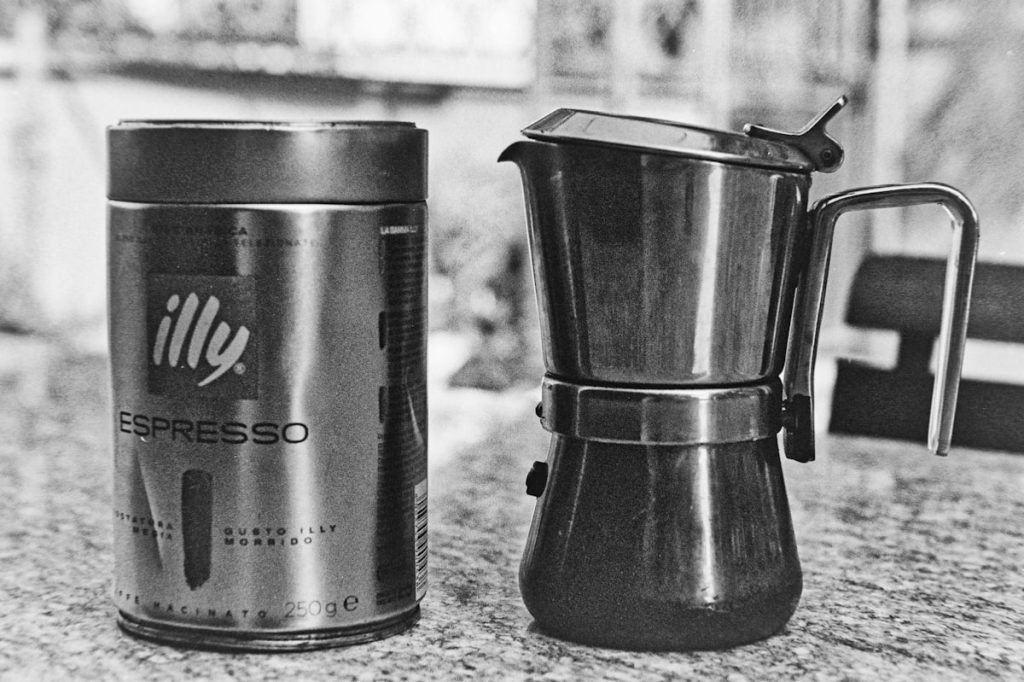
The moka pot (or mokapot, coffee pot) is probably the most common device for making espresso-style drinks at home in Europe. It works on the principle of steam extraction: water in the lower boiler heats up, creating steam and forcing the hot water through finely ground coffee into the upper part of the container.
What you get with moka pot
- Very intense, full-bodied coffee with a strong body
- Darker, more “robust” flavor profile than filter coffee
- There is no classic espresso crema, but when prepared correctly, a thin foam appears
- Ideal for preparing milkshake bases at home
Step by step: espresso with moka pot
- Heat the water at about 90–95 °C (not cold, not boiling — this is the most common mistake).
- Grind the coffee finely., but not as fine as for an espresso machine — a little coarser so as not to clog the filter.
- Fill the filter basket to the top, flatten slightly, do not tamp with force.
- Assemble the pot, place on a low flame or low induction setting.
- When the coffee starts flowing, reduce the heat and stop before "splashing"“ — that noisy end of the extraction adds bitterness.
- The first few milliliters that come out are the most intense — this is your “espresso shot.”.
Common mistakes in moka pot
- Grinding too fine → clogged filter, pressure too high, bitter taste
- Grinding too coarse → guided, without a body
- Too cold water at the beginning → long extraction, bitter coffee
- Flame too high → too fast extraction, loss of aroma
- Ignore the “splash” → the bitter last drops ruin the whole shot
Method 2: AeroPress — the most controlled alternative
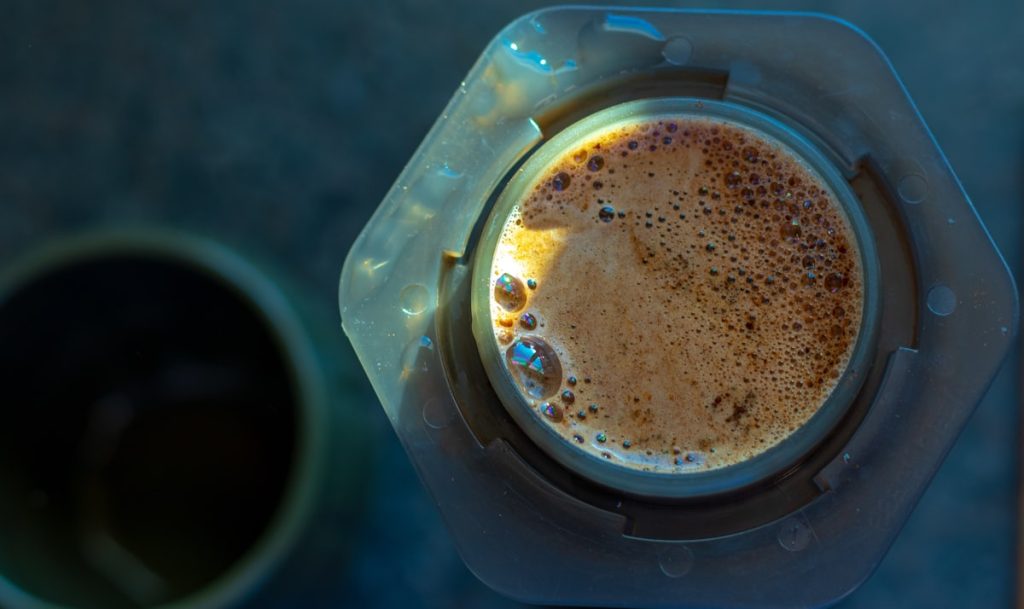
The AeroPress has become synonymous with “machine-free espresso” among serious specialty coffee lovers. The reason is simple: it allows for the most control over all parameters — water temperature, ratio, time, and pressure, which you add manually. The result is a thick, rich coffee with low acidity and a clear bean flavor.
Why AeroPress works
Although the manual pressure of the AeroPress does not reach the 9 bars of a professional machine (you achieve between 0.5 and 1 bar), the extraction is still exceptional because it combines short extraction window, fine grinding and direct contact of coffee with water. This means an intense drink with low extraction of bitter compounds.
Step by step: espresso with the AeroPress
- Grind the coffee finely. — similar to the moka pot, but slightly finer.
- Heat the water to 88–92 °C (lower temperature = less bitterness, purer taste).
- Place the AeroPress in the inverted position (face down with the piston) or in the standard position with a paper filter.
- Add 15–18 g of coffee, then pour in water in a ratio of 1:2 (e.g. 15 g coffee → 30 g water).
- Stir gently., wait 30–45 seconds.
- Press the plunger slowly — the entire extraction should take 20–30 seconds.
- The result is 30–40 ml of a thick, intense drink.
Common AeroPress Mistakes
- Water temperature too high → bitterness and sharpness
- Too much water ratio → the drink becomes thin, more filter coffee than espresso-like
- Too fast pressure → uneven extraction
- Not enough coffee → a weak drink without body
Method 3: Manual extraction with a French press — bonus method
A French press is not the classic way to make an espresso-like drink, but with the right approach — fine grind, short extraction, small amount of water — you get a very concentrated coffee that you can use as a base for milky drinks. It's not the same as a moka pot or AeroPress outlet, but as a necessary substitute or for those who already have a French press at home, it's a useful option.
- Use ratio 1:5 instead of the classic 1:15
- Grind the coffee. finer than usual
- Soaking time: 2–3 minutes (not 4 minutes like with the filter)
- The result will be thick, dark, and intense — not espresso, but an acceptable starting point for a homemade cappuccino.
Comparison of methods: which one is right for you?
Each method has its own advantages and disadvantages. The comparison below will help you decide based on your priorities — taste, budget, time, and experience.
- Flour path: Best accessibility, low cost (from €15), intense and robust profile — ideal for beginners and those looking for a “classic espresso feel”.
- AeroPress: Best control over flavor, mid-range price (from €35), clean and complex profile — ideal for those who like to experiment and appreciate specialty coffee.
- French press (short extraction): Minimal cost (the device is often already at home), less repeatable result — a good emergency alternative, but not the primary method.
Which coffee to choose for espresso at home without a machine
The method is only one side of the equation. The other — and often more important — is the coffee itself. To make an espresso-like drink at home, you need:
- Fine grinding: For moka pot, grind slightly coarser than for an espresso machine, for AeroPress finer. Pre-ground coffee in supermarkets is often not fine enough or too uniform — we recommend fresh grinding from quality beans.
- Fresh coffee: Coffee that was roasted more than 6–8 weeks ago loses most of the aromatic compounds that give espresso its body and complexity.
- The right roasting profile: For an espresso-style beverage, beans with a medium-dark roast profile are best — developed enough for body, but without burnt bitterness.
- Quality grinder: If you're serious about making good homemade espresso without a machine, a grinder is the most important investment. Even a good manual grinder (from €40–60) will significantly improve the result.
Espresso crema without a machine: myth or truth?
Crema — that golden foam on top of an espresso — is the result of emulsifying CO₂ and coffee at high pressure. Without 9 bars, there is no real crème. But that doesn’t mean your drink is inferior.
With a moka pot, when brewed properly, a thin, creamy foam appears on the surface. With an AeroPress, finely ground, fresh beans create a microfoam that gives the drink a silky texture. Both are technically different from espresso crème, but for home use — including making cappuccinos — they are perfectly adequate.
If you find crema aesthetically lacking: fresh coffee, the right temperature, and a slight tamping of the coffee pot will do the most that is possible without a machine.
Frequently asked questions about making espresso at home without a machine
Is espresso without a machine really possible?
Technically speaking, “real espresso” requires 9 bars of pressure and precise extraction control. What we achieve with a moka pot or AeroPress is an espresso-like beverage — very close in intensity, body, and aroma, but not technically identical. For home use, this is perfectly sufficient and for most people imperceptible in everyday use.
Which method is most similar to espresso from a cafe?
AeroPress, when set correctly, produces a beverage that is closest in flavor profile to specialty espresso. Moka pot is closer to a traditional, more intense Italian espresso. Both are worth trying.
Do I need a special grinder for espresso at home without a machine?
Not necessarily a professional one, but a good manual grinder is a worthwhile investment. Pre-made grinds are often not suitable for espresso grinding — and the difference in the cup is noticeable.
What kind of coffee is suitable for making espresso at home without a machine?
Fresh, high-quality roasted coffee with a developed profile (medium to medium-dark roast) is the basis. For a specialty experience, we recommend single origin beans or blends designed for espresso preparation.
Free gift
Mini course: 3 espresso methods without a machine