What is the pour-over method and why does the specialty world love it?
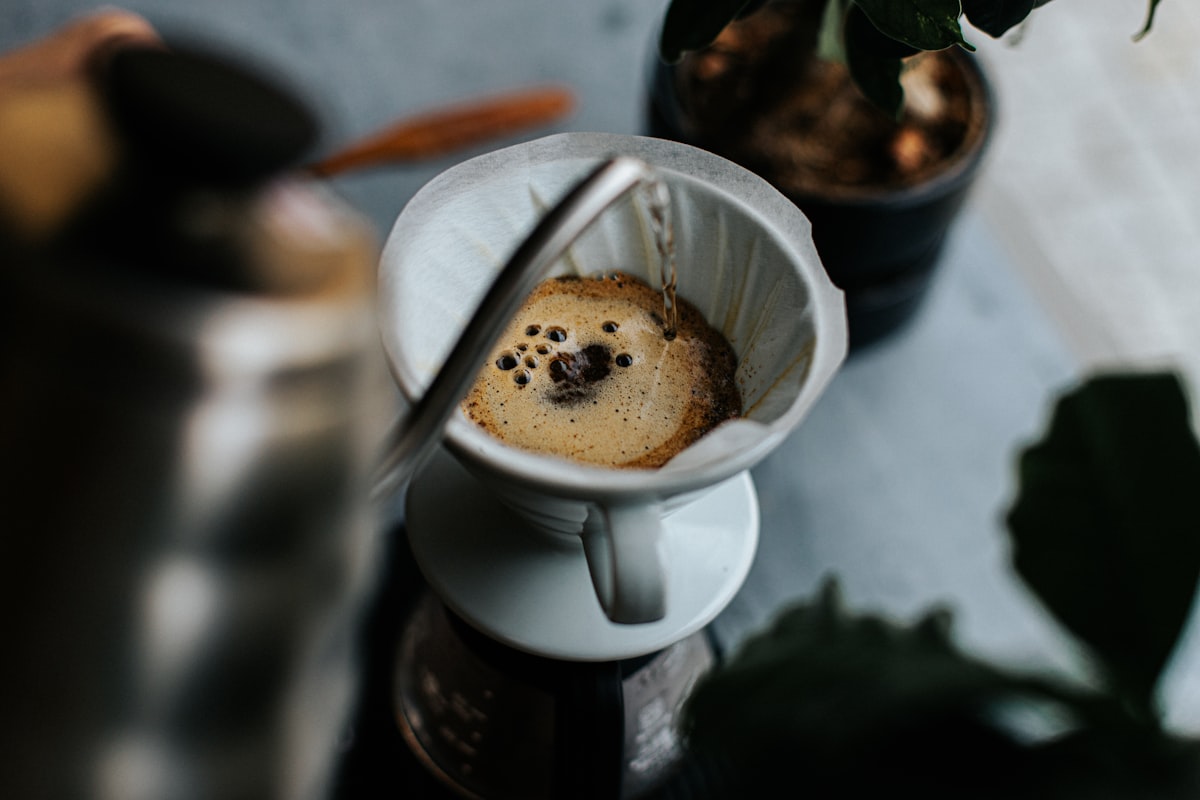
Pour-over is a manual brewing method in which hot water is slowly passed through ground coffee beans and a paper filter. The result is a clear, aromatic and extremely complex cup – no sediment, no impersonal automatisms, just the pure interaction between coffee and water. That's why pour-over is considered the method that really lets specialty coffee speak for itself.
Compared to espresso, where a machine takes control, or Turkish coffee, where the beans are brewed directly in water, pour-over is precise, flexible, and repeatable. Once you understand the logic behind the parameters, every cup becomes your recipe—not a coincidence.
Equipment and coffee: what you need to get started
A good pour-over doesn't require expensive machines. You just need the right tools and – most importantly – quality, freshly roasted coffee.
Basic equipment
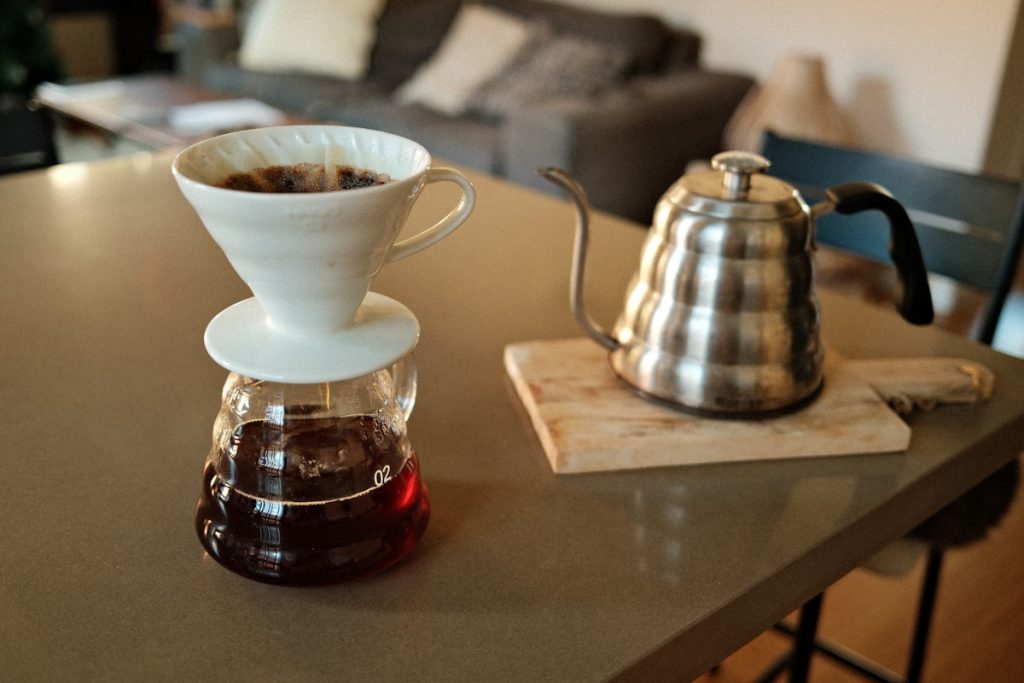
- Dripper – the most common are Hario V60 (conical, with ribs) and Chemex (with a thicker filter and a softer profile). For beginners, we recommend the V60 01 or 02.
- Paper filter – the right size for your dripper. Always rinse it with hot water before use to remove the papery taste.
- Mill (burr grinder) – uniform granulation is key for proper extraction. Blade grinders are not suitable.
- Kitchen scale – accuracy up to 0.1 g increases repeatability.
- Long spout kettle (gooseneck) – allows for precise and slow pouring. A classic teapot works, but is less controllable.
- Thermometer – or a heater with a thermostat.
Coffee: freshness is everything
For pour-over, choose specialty coffee roasted less than 4–6 weeks ago. We recommend lighter to medium roast, which preserves floral, fruity and acidic notes – qualities that the pour-over method brings out better than any other.
Key parameters: ratio, temperature and time
Pour-over is not an intuitive art – it is a repeatable technique supported by measurable parameters. These three are the foundation.
Coffee : water ratio
The golden rule of the specialty world is 1 : 15–17 (1 gram of coffee per 15–17 grams of water). For beginners, we recommend 15 g coffee per 250 g water (ratio ~1 : 16.7). This gives you a full but not overwhelming cup that is forgiving of minor errors in technique.
Water temperature
The optimal range is 92–95°C. Too low a temperature (below 88 °C) causes under-extraction: the coffee will be acidic and watery. Too high (above 97 °C) causes over-extraction: the coffee will be bitter and astringent. An easy trick for beginners without a thermometer: let the boiling water stand for 30–60 seconds before you start.
Total extraction time
For a 250ml cup, aim for a total time of 2:30–3:30 minutes from the first pour. A shorter time means the coffee is not extracted enough; longer than 4 minutes indicates that the grind is too coarse or the pour is too slow.
Pour-over step by step: a beginner's recipe
The recipe below is designed for V60 (size 01 or 02) and one cup (250 ml). Before you begin, prepare a scale, thermometer, and clock.
Recipe: 15 g coffee / 250 g water / 92–95 °C
- Rinse the filter (before 0:00)
Place the paper filter in the dripper. Pour hot water over it to adhere the filter to the walls and remove the papery taste. Pour the water out of the cup under the dripper. - Add coffee (before 0:00)
Place 15g of medium-fine ground coffee into the filter. Shake the dripper to level the »bed«. Place the entire assembly on the scale and reset to 0. - Bloom phase (0:00–0:30)
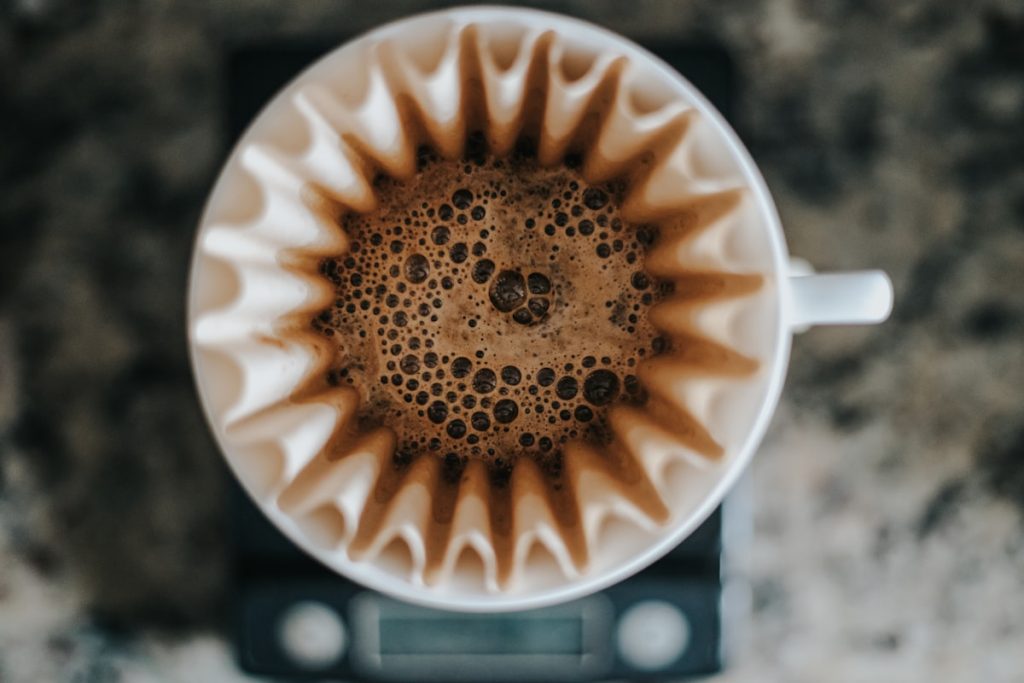
Pour slowly 30g water (twice the weight of the coffee) in concentric circles from the center outwards. Every drop should wet the beans – do not water the edges of the filter. Wait 30 seconds. During this time, the CO₂ trapped in the fresh coffee escapes, creating a characteristic »bloom.« Better bloom = fresher coffee = better extraction. - First watering (0:30–1:30)
Slowly add water in spirals from the center outwards until you reach 150g total. Keep the flow constant and slow – this is where the gooseneck jug really shows its value. The water should not run along the walls of the filter. - Second watering (1:30–2:15)
Continue watering until the total 250g water. Maintain an even water level above the coffee bed – do not let the coffee dry out completely between waterings. - Drainage (2:15–3:00)
Allow the water to drain completely through the filter. Aim for a total time between 2:30 and 3:30 minutes. When the dripping has almost completely stopped, remove the dripper. Swirl the cup slightly and wait 30 seconds for the aromatic profile to open.
The most common mistakes in pour-over coffee and how to fix them
Even small changes in technique can drastically affect the taste. Here are the most common beginner problems and their solutions.
The coffee is sour and watery.
This is a sign. sub-extractions. Causes are: grinding too coarse, water temperature too low or total time too short. Solution: grind finer, raise temperature by 1–2 °C or pour a little slower to extend contact.
The coffee is bitter and astringent.
This indicates over-extraction. The grinding is probably too small, the temperature is too high or the time is too long. Solution: Set the grinder to a larger granulation or lower the temperature.
Water drains too quickly (under 1:30)
The filter is not attached well to the dripper wall or the grind is too coarse. Overflow along the edge of the filter also plays a role here - the water bypasses the coffee bed and is not extracted properly. Try grinding finer or correct your watering technique.
Water does not drain at all (clogging)
The grind is too small or you watered too unevenly and created a »channel.« Grind coarse and be more precise with spiral watering.
Pour-over in the Slovenian specialty context
Pour-over is increasingly popular in specialty coffee shops in Slovenia, where the price of a cup of hand-brewed filtered coffee is often twice as high as an espresso drink – and rightly so. The method allows coffee shops and home brewers to extract a significantly more complex and distinct flavor profile from the same amount of coffee beans.
At home, pour-over also makes financial sense: one kilogram of quality specialty coffee is enough for 60-70 cups. Compared to daily visits to the coffee shop, the investment in basic equipment pays for itself in weeks, not months. And perhaps most importantly – every morning becomes a ritual, not a routine.
Frequently Asked Questions (FAQ)
What is the difference between pour-over and filter coffee?
»Filtered coffee« is a catch-all term that encompasses all methods where water flows through a filter. Pour-over is a specific manual technique within this category – unlike an automatic filter coffee machine, with pour-over you control every pour.
Do I need to have a gooseneck jug?
It's not necessary, but it's recommended. The long, thin spout allows you to pour slowly and precisely in concentric circles. This is harder to do with a regular teapot, but not impossible - just be slower and more careful.
Which coffee is best for pour-over?
We recommend single-origin specialty coffees with a light to medium roast. Ethiopian, Kenyan, and Colombian coffees are popular choices because their natural fruity and floral notes are perfectly enhanced by the pour-over method. The key is to make sure the coffee is freshly roasted.
How finely should I grind my coffee for pour-over?
Aim for a medium-fine grind – similar to the texture of sea sand. Too fine a grind will clog the filter and cause bitterness; too coarse a grind will add acidity. The exact setting will depend on your grinder and coffee, so adjust it gradually.
Is bloom really necessary?
For fresh coffee – absolutely yes. The CO₂ released during the bloom would otherwise interfere with the extraction and result in an unevenly extracted cup. If your coffee doesn’t bloom (no rising, no bubbles), it’s probably too old.
Free gift
PDF recipe: Ideal pour-over for beginners